Structural Drying in Maple Grove, MN
The water has been off the basement floor for three days. You ran a shop vacuum, borrowed two box fans, and opened the egress window for an afternoon. The carpet feels dry to the hand, but the room still smells like a wet dock and the bottom of the drywall is cool when you touch it. This site puts you through by phone to an independent local provider who dries out houses in Maple Grove and the northwest Hennepin County suburbs after the standing water is gone.
Measuring the wet instead of guessing at it
The crew begins with a map. They meter every wall at the base and at a foot up, read the subfloor or the slab, test the carpet pad if it is still in place, and check the framing where it is exposed. Each reading is compared with a dry reference, usually a wall upstairs that never got wet, so the target is this house and not a number from a book. They also read the air: temperature and humidity in the wet room and outside the house, because a Minnesota basement in April is cool and damp, and the equipment has to be sized for that.
The map sets the plan. Walls that are wet in the cavity get air pushed behind the drywall through small holes at the plate. Floors with a wet subfloor get mats or air movers aimed across the surface. Everything gets written down with a date.
Before the equipment arrives
Keep the heat on. Warm air holds more water than cold air, and a basement at 60 degrees dries far slower than one at 72. Close the windows; outdoor air in a Minnesota spring or summer usually carries more moisture in than it takes out. Move furniture off the wet floor and away from the wet walls so the air can reach them. Pull back any area rugs. Then call, and say the water is out but the room is still damp. The provider wants to see the room before any more fans are added.
Air movers, dehumidifiers, and what each one is doing
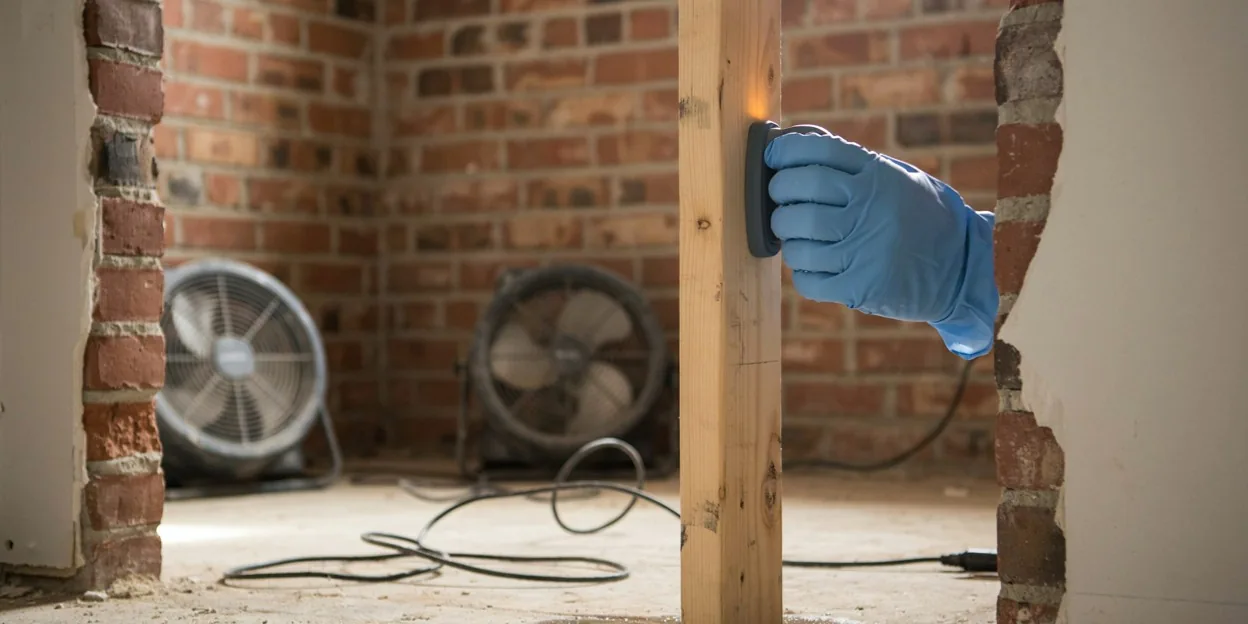
Air movers push air across wet surfaces so the water inside the material moves to the surface and evaporates. Dehumidifiers pull that water out of the air so it does not settle back into the next wall over. The two work together, and the balance between them changes every day as the readings change. In a sealed basement a refrigerant dehumidifier handles most jobs; in a cold space or a tight attic the crew may bring a desiccant unit instead. Readings are taken daily, equipment is moved or removed as walls come dry, and the job ends when the materials match the reference, not when the fans have run a set number of days.
Structural drying follows every water job on this site. It finishes a basement flooding cleanup once the pad is out, dries the rim joist and garage ceiling after a frozen pipe cleanup, and pulls the water out of the top plate after an ice dam water damage leak.
Why a Maple Grove basement is slow to dry on its own
Maple Grove's houses are tight. Two-stories built from the 1980s on have poured or block foundations wrapped in insulation, finished basements with carpet over pad and drywall over fiberglass, and few windows below grade. Once water gets into that assembly there is nowhere for it to go. Spring makes it worse: the ground outside the foundation is saturated from the thaw, the slab stays cold into May, and the dew point outdoors climbs through June. A basement that took water in the March melt can still read wet at the plate in July if nobody dried it on purpose.
The upper floors have their own problem. A bathroom floor over a garage or a laundry room over the kitchen holds water in the subfloor between two layers of finished material, and a ceiling that was painted over while the joists above were still wet keeps the smell for years.
Drying is normally part of the same claim as the water loss that caused it, and the daily readings are the record the adjuster uses to see how long the equipment needed to run. This site cannot say what any policy pays. Ask the crew for the moisture log at the end of the job and keep it with the photos.
How to describe a house that is still damp
Say when the water came in and when it was removed, which rooms still feel damp, and whether anyone has already run fans or a rental dehumidifier. Mention if the smell is strongest in one spot. Call (763) 314-1771.