Ice Dam Water Damage in Maple Grove, MN
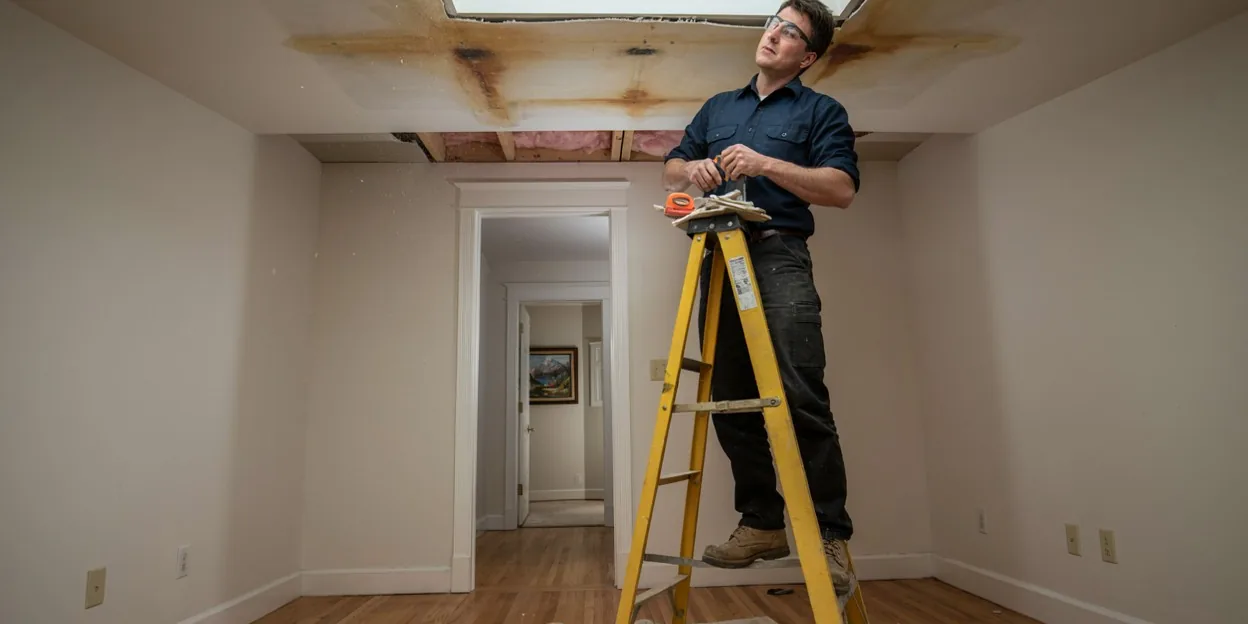
The icicles along the front of the house were a foot thick by the second week of February. Then a warm afternoon came, and that night water started running down the inside of the bedroom window frame, the ceiling above the closet turned the color of tea, and the carpet along the outside wall was wet to the touch. This site puts you through by phone to an independent local provider who dries out ice dam damage in Maple Grove and the northwest Hennepin County suburbs.
Tracing the water from the eave to the carpet
An ice dam leak enters at the top of the wall, so the crew starts in the attic. They look at the insulation above the stained ceiling, the top plate of the exterior wall, and the roof deck at the eave, where the water backed up under the shingles. From there they meter the wall below: the drywall at the top, at the window, and at the base, and the carpet pad along the outside wall. Water from a dam often runs inside the wall cavity and shows up at the floor two rooms away from the stain, so the readings go along the whole wall, not just under the brown spot.
If the house has a cathedral ceiling or a room over the garage, the crew pays extra attention there. Those roof sections have the least attic space, the warmest decks, and the thickest dams.
What to do while the ice is still on the roof
Do not climb on the roof or chip at the ice with a hammer, and do not run a torch along the gutter. If you can reach the eave safely from the ground, a roof rake pulled through the snow above the dam slows the melt that feeds it. Inside, move furniture and anything on the floor away from the wet wall, put a bucket under the drip, and photograph the ceiling, the wall, and the window frame. Then call. A roofer or an ice-removal crew clears the dam. The cleanup provider dries the house.
Insulation that comes out, drywall that may stay
Wet blown-in or fiberglass insulation in the attic almost always comes out over the affected area, because it has lost its loft and will keep the top plate and the ceiling drywall wet for weeks. The ceiling drywall is decided by the readings and by whether it sags: a stained but firm ceiling can often be dried from above, while a bowed one comes down. The wall drywall is read top to bottom, and a wall with wet insulation behind the stain is opened so the batts can be replaced. Carpet along the outside wall usually dries once the pad is pulled.
A stain under the eave that has grown over several winters points to a longer problem, and the ceiling gets handled as a ceiling water damage repair. Once the wet material is out, structural drying runs equipment in the attic and the room below until the top plate and the studs read dry. If the damage is on a roof section with no attic access, leak detection can map the wet cavity before any ceiling is opened.
Why Maple Grove roofs build dams
An ice dam needs three things: snow on the roof, heat leaking from the house into the attic, and an eave that stays below freezing. Maple Grove's 1980s and 1990s two-stories have all three in a deep snow year. Recessed lights, bathroom fans vented into the attic, and attic hatches without insulation warm the roof deck from below, the snow melts, and the water refreezes where the roof extends past the heated wall. Winters like 2022–23, when the Twin Cities measured close to 90 inches of snow, produced dams along entire blocks, and the February melt sent water inside houses that had never leaked before.
The north half of the city, where the newer two-stories went up in the late 1990s and 2000s, has more complex rooflines with valleys and dormers, and those are where the thickest ice forms. South-facing eaves melt and refreeze the most often, so a bedroom on the south side of a two-story is a common place to find the stain.
Ice dam damage is commonly handled as sudden damage under a homeowner policy, though removing the ice itself may be treated separately from drying the interior. This site cannot say what yours covers. Have the crew photograph the dam from the ground and log the attic and wall readings so the adjuster sees the path the water took.
When you call about water under the eave
Say which room is wet, whether the stain is on the ceiling or the wall, and whether water is still running. Mention how much snow is on the roof and whether the house has a room over the garage. Call (763) 314-1771.