Basement Flooding Cleanup in Maple Grove, MN
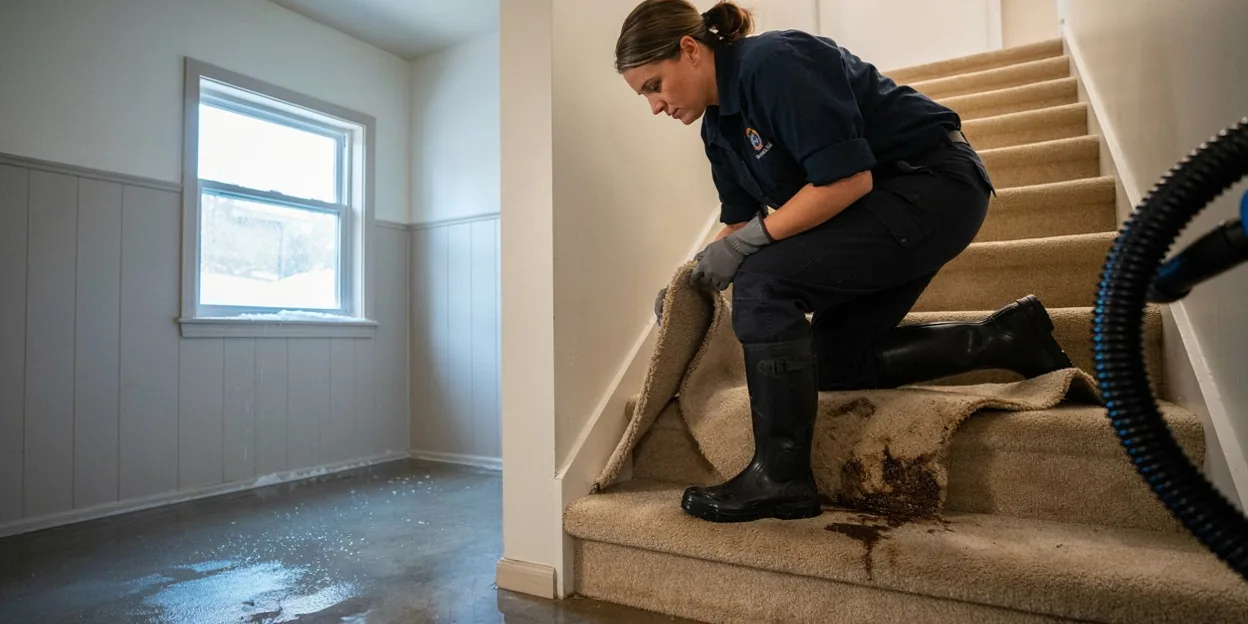
You went down to switch the laundry and the rec room carpet gave under your foot. The water line on the storage boxes is two inches high, the drywall behind the sectional is dark along the bottom, and the sump pump is cycling every half minute without catching up. This site puts you through by phone to an independent local provider who cleans up flooded basements in Maple Grove and across northwest Hennepin County.
Finding the edge of the wet before anything is cut
The crew starts by walking the whole level with a moisture meter, not just the room with the puddle. A basement slab is one flat pour, and water under carpet pad crosses doorways and runs along the bottom plate of every partition wall before it shows on the surface. They lift a corner of carpet in each room, read the pad, meter the drywall at two and twelve inches, and compare the numbers with a wall upstairs that never got wet. The sump pit, the float, and the discharge line get checked in the first few minutes, because a basement that floods with a dead pump is a different job from one that floods with a working one.
If the water came in at the footing, the crew looks for the stain pattern along the exterior wall. If it came through a crack in the slab or at the floor-wall joint, the wet shows up as a ring around the lowest spot in the floor. The source changes how the walls are treated.
The hour before the truck pulls in
Flip the breaker for the basement if you can reach the panel without stepping in water. Carry up what you can lift: boxes, rugs, electronics, and anything with a fabric skirt that touches the floor. Photograph every wall, the carpet, and the water line on the boxes before anything goes outside. Leave the carpet down, because the provider wants to see where it is wet. If the pump is running, let it run. If it is silent and the outlet is dry, check the GFCI and the float before you call, and say what you found.
Carpet that stays, pad that goes, drywall that depends
Carpet in a flooded basement often dries once the pad is gone, provided the water was clean and the crew reaches it inside a few days. Pad almost never survives, and it comes out in strips so the slab can dry underneath. Drywall is decided by the readings: a wall that wicked four inches of clean water usually dries in place with air pushed into the cavity, while a wall with wet insulation behind it gets cut at two feet so the fiberglass can come out. Laminate and engineered flooring over a foam underlayment trap water underneath and usually have to be lifted.
Once the wet material is out, structural drying takes over, with air movers and dehumidifiers run against daily readings. If the pump was the cause, a sump pump failure cleanup looks at why it stopped. If the water came up a floor drain, the job becomes a sewer backup cleanup and the rules change.
Why a Maple Grove basement is eight feet deep and wet in March
Maple Grove's footings go below the frost line, which puts the slab eight feet or more into glacial till and pockets of sand, and the lots between the city's lakes sit on ground that holds water. In a normal spring the snowpack goes in two or three weeks of March, the frost comes out of the ground, and the water table under a Rush Creek or Elm Creek basement rises before the creeks do. Footing tile and the sump handle it most years. In June 2014, when the airport measured 11.36 inches for the month, and again on September 21, 2016, when more than eight inches fell on Maple Grove overnight, the ground was full before the storm started and the pits could not keep pace.
The houses here were built from the 1980s through the 2000s, and almost every basement was finished within a few years of the first owner moving in. That means carpet over pad, drywall over fiberglass over the foundation, and a bathroom and a bedroom down there, which gives the water a lot to soak.
Most homeowner policies treat a split pipe as sudden damage and pay for the cleanup, while groundwater seepage and water from a drain or the sump pit are commonly excluded unless a water backup endorsement is on the policy. This site cannot say what yours covers. Have the crew record the readings and photos from the first visit so the file goes to the adjuster complete.
How to describe a flooded Maple Grove basement
Say which rooms are wet, whether the water is still rising, whether the pump is running, and whether the water came from outside, a pipe, or a drain. Mention if the basement is finished and whether there is a bedroom down there. Call (763) 314-1771.